
Breakthroughs Have Terrible Optics
Before reality television had a name, I made a TV pilot called The Haircut.
The idea was simple. I gave strangers free haircuts and filmed what happened. Not the haircut. What happened. The conversation that opens up when someone lets you that close. The things people say when their guard is down and scissors are moving and there’s nothing left to perform.
CTV gave us money to develop it, and then passed. They couldn't understand the value in it. Why would anyone want to watcha show about strangers getting free haircuts.
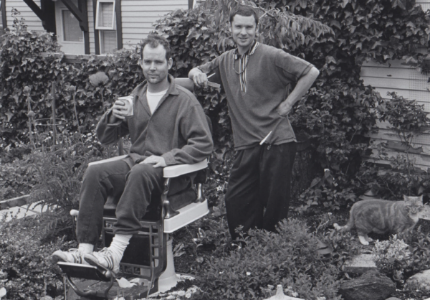
Author Douglas Copeland getting a haircut from David Frank Gomes
At the time I was out of options, so I moved on.
Years later, when reality television became a global phenomenon, I sometimes looked back on The Haircut with mixed feelings. I was very proud of what I’d created. I just wish I’d had the resources to see it through.
I’m not telling that story to be clever about it. I’m telling it because I remember what it felt like to sit with something true that nobody could yet see. To hold a direction when the evidence was pointing elsewhere. To look, from the outside, exactly like someone who had made a mistake.
That feeling isn’t proof that something real is happening. Plenty of bad ideas feel misunderstood too. But it is a signal worth paying attention to. A clue that the picture may be larger than the evidence currently suggests.
I think of Alexander Fleming, the scientist who discovered penicillin, in a lab looking at a petri dish that had been left out. Where most people would have seen contamination… a mistake… something ruined. He saw something curious in it. Not solved. Not explained. Just… interesting enough to stay with.
Leadership is lonely.
Not in the way people say it is. The corner office, the weight of decisions, the buck stopping with you. Those things are real but they’re not the loneliness I mean.
The loneliness I mean is this: when you are furthest ahead of where the world currently is, you are also furthest from being understood. You look like a contrarian. Sometimes you look like you’ve lost the plot entirely.
The people I sit with often come to me not because they don’t know what to do. They don’t need advice. They don’t need validation.
They need somewhere to think.
Somewhere to hold an uncertainty that few people around them can help them hold.
What I’ve noticed, across twenty years of these conversations, is that breakthroughs have terrible optics.
A founder holds a direction for eighteen months while everyone around them quietly loses faith. A leader makes a call that looks reckless and turns out to be the only thing that saved the company. Someone stays with a problem - really stays, past the point where most people have declared it unsolvable - and then something shifts.
The staying is the thing.
Most people leave too early. Not because they’re cowards. Because it genuinely looks like time to go. The evidence says move on. The reasonable interpretation says cut your losses.
Sometimes the people deciding what gets through are not close enough to the thing being tried, so they misread it as noise.
Leadership, at its core, is often the willingness to remain with something longer than feels comfortable. Longer than looks sensible. Long enough for the picture to change.
I don't tell people when to hold and when to fold. Nobody can.
But I can tell you that the feeling of being wrong ... that specific texture of doubt that comes when you’re ahead of where the world currently is is not the same as actually being wrong.
Learning to tell the difference… while you’re still inside it. And not always knowing which way it is until later.
And even then… not always.