
How to be more like your dog.
People often describe mindfulness as "living in the present moment," but I've never found that explanation entirely satisfying. Where exactly is the present? The instant you think you've found it, it's already gone. Every second has a beginning, a middle, and an end. Try to hold on to now, and it slips through your fingers. Perhaps mindfulness isn't about finding the present at all. Perhaps it's about noticing where your attention has wandered.
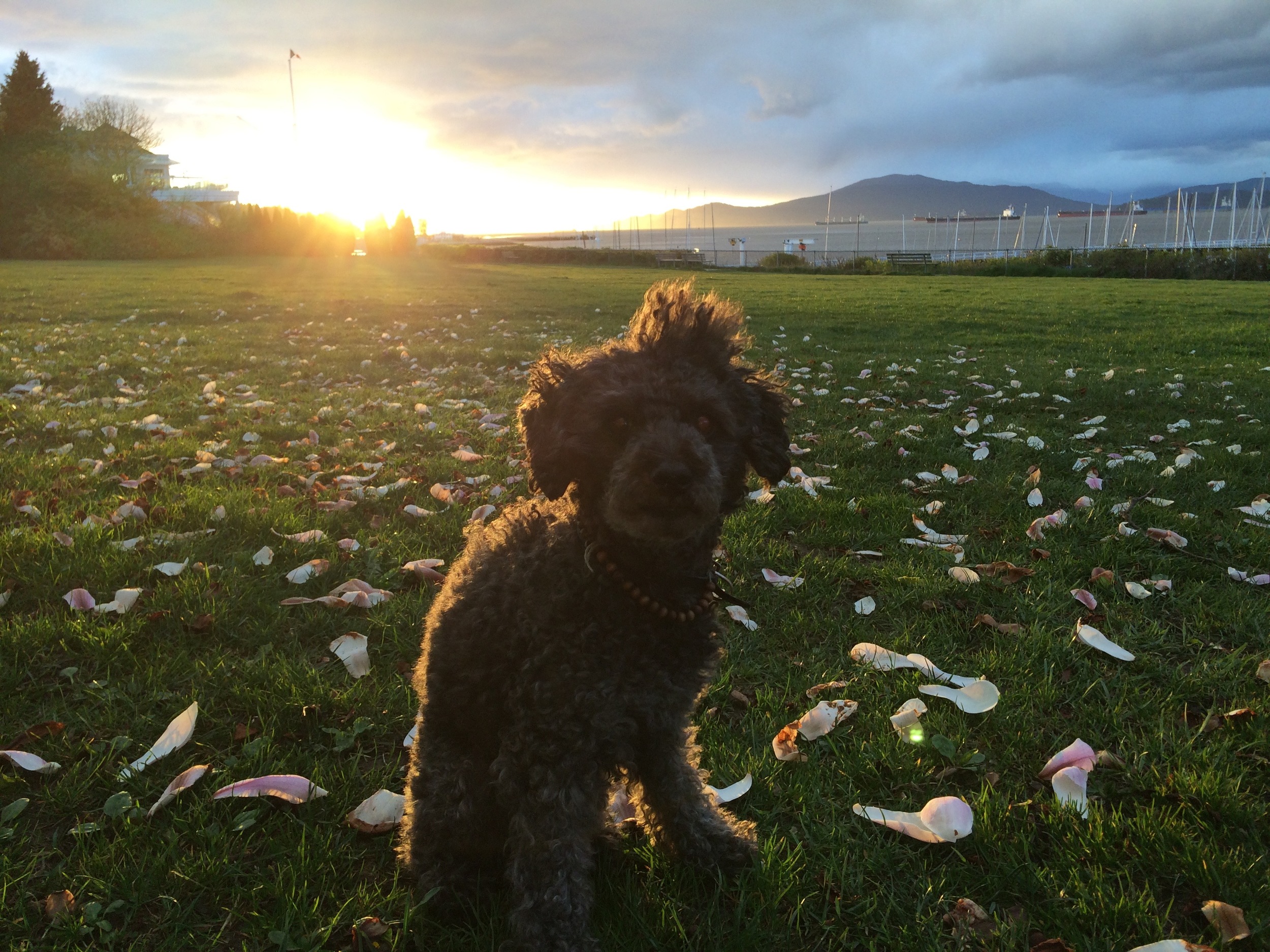
I think about this almost every day when I walk my dog, Biscuit. We have walked the same stretch of beach hundreds of times. I know every bend in the path, every patch of sand, every familiar view. Yet somewhere along the way I stop seeing it. My mind drifts to another beach I've visited, a conversation I had yesterday, or something I need to do tomorrow. Twenty minutes later the walk is over, and I realise I wasn't really there for most of it.
Biscuit has a completely different relationship with the world. Every walk seems like the first one he has ever taken. The same stick is worth chasing. The same waves deserve investigating. The same smells are somehow as fascinating as they were yesterday. He isn't searching for a better beach or wishing he were somewhere else. He is completely absorbed in the one he is on.
That isn't because dogs possess some mystical wisdom. It's because they don't have the same habit of abandoning the moment they are living in. Human beings have remarkable minds. We can remember the past, imagine the future, solve problems, and create things that have never existed before. Those abilities are extraordinary. The difficulty begins when we spend so much time in memory and anticipation that we stop inhabiting the only place where life is actually happening.
I see this often in my work. People who have experienced serious illness, profound loss, or major upheaval rarely tell me they miss extraordinary moments. They miss ordinary ones. They want to sleep in their own bed again. Walk through their neighbourhood. Share a simple meal with someone they love. The smallest parts of everyday life, the ones they barely noticed before, suddenly become precious.
It makes me wonder if the ordinary was never ordinary at all. Perhaps we simply weren't paying attention. We spend years believing happiness will arrive with the next achievement, the next holiday, the next chapter of life, while overlooking the quiet moments that eventually become the ones we long for most.
Mindfulness doesn't ask us to ignore the past or stop planning for the future. Memory helps us learn. Imagination helps us create. The question is whether they have become places we live instead of places we visit. When that happens, we begin missing our own lives while thinking about them.
My dog reminds me of that every morning. He doesn't care whether yesterday's walk was better or whether tomorrow's might be. He meets this one with curiosity. Every walk is worth taking because every walk is the one that is happening.
Perhaps that's what mindfulness really offers us. Not the impossible task of capturing the present moment, but the much simpler practice of returning our attention to the life that is already unfolding. The extraordinary isn't hidden somewhere in the future. More often than not, it's disguised as an ordinary Tuesday morning that we almost walked past without noticing.
If you've found yourself living more in memory or anticipation than in the life directly in front of you, you may not need another mindfulness technique. You may simply need a conversation that helps you notice where your attention has been living and gently return it to where your life is actually unfolding. That's the kind of conversation I try to create with my coaching clients.
